News
In Uzbekistan, construction companies will be exempt from customs duties on special equipment until 2029
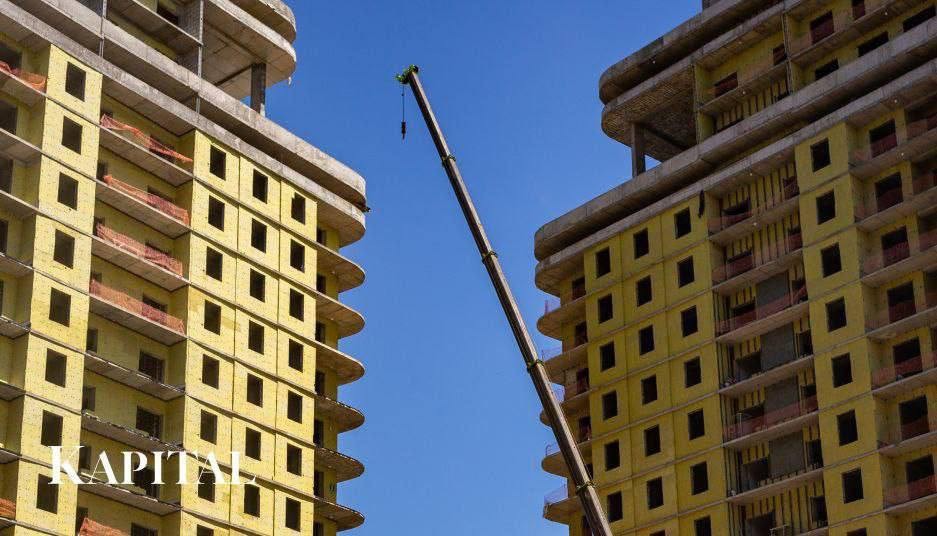
Uzbekistan has approved new rules in the construction sector, including a ban on changing the internal layout of apartments in residential buildings older than half a century, as well as large-scale digitalization of connections to utility networks. About thisit saysin the corresponding presidential decree published on Lex.uz.
Starting July 1, 2026, the processaccessionnew buildings to utilities will be carried out according to the “one application - one payment - all connection points” system. Information from water, gas and electricity supply companies about available reserves and capacities is integrated into the Digital Government portal in the form of a geographic information base.
For the capital, this process is planned to be completed by the end of 2026, for other regions - by the end of 2027. Thanks to this integration, the issuance of technical specifications in populated areas with electronic master plans will become automatic and will take place without the human factor.
All as-built documentation generated during the construction of objects will be completely transferred to electronic form, forever abandoning paper media.
Control over contractors is being strengthened. In case of refusal to eliminate deficiencies discovered by the inspection during the period of warranty service of the residential complex, construction companies will be reduced in the ranking by accruing penalty points.
Until July 1, 2029, contractors and designers importing special construction equipment, measuring instruments and laboratory equipment for the inspection of structures, which have no analogues on the domestic market, will be exempt from customs duties.
The Cabinet of Ministers was instructed to develop and approve within one month a specific list of special technical equipment that will not be subject to payments when crossing the border.
According to the document, a strict restriction is introduced on changing the internal configuration of apartments in residential buildings that have been in operation for more than 50 years. The only exception is procedures aimed at strengthening load-bearing structures.
The Republican Center for Economic Reforms and Pricing in the Sphere of Urban Development will appear within the structure of the Ministry of Construction and Housing and Communal Services. The new department will be responsible for maintaining the “National Classifier of Construction Resources” platform, introducing digital methods for calculating costs and regularly monitoring the construction materials market.
From July 1, 2026, the practice of parallel design and construction of new structures will be abolished. As a pilot experiment, construction and installation processes will begin to be implemented according to gradually developed documentation. This rule will affect facilities financed by private capital and foreign direct investment, but will not affect the construction of multi-storey residential buildings.
Using this approach for buildings with government funding will require a separate resolution of the President or the Cabinet of Ministers. The start of construction work will be possible only after undergoing an examination of the design and estimate documentation for each stage and its registration by the controlling inspection.
Source
